Sleep Better as a Couple: Matching Mattress Support for Two Bodies
You've both been lying awake at 2 a.m. again. Your partner shifts positions for the fifth time in an hour, and you feel the familiar jolt of the mattress moving beneath you. Meanwhile, they're waking up with lower back pain while you're overheating on your side of the bed. You love each other, but sleeping together has become exhausting. The temptation to blame "incompatible sleep styles" is strong, but the real problem might not be your compatibility at all, it's likely your mattress.
When two people share a bed, they're asking one sleep surface to accommodate fundamentally different needs: different body weights, sleep positions, movement patterns, and temperature preferences. Yet most couples approach mattress shopping as if they were buying for a single sleeper, compromising on firmness or features to find something "in the middle" that truly satisfies neither partner. This approach almost always fails because mattress support for couples isn't about splitting the difference—it's about finding a system that genuinely supports both bodies simultaneously.
The good news is that one mattress can absolutely work for two people. But it requires understanding what your bodies need and choosing a sleep surface designed to deliver balanced support rather than requiring constant compromise. This article explores why couples struggle on shared mattresses, what features actually matter for two sleepers, and how to make an informed choice that improves sleep quality for both partners.

Why Couples Struggle to Sleep Well on the Same Mattress
Shared mattresses create a unique engineering challenge that single sleepers never face: one sleep surface must simultaneously support two bodies with potentially different weights, compressing materials differently and creating uneven support profiles beneath each partner.
Research from the National Sleep Foundation demonstrates that couples report lower sleep satisfaction than single sleepers, with motion disturbance being the leading complaint. But motion disturbance isn't really the core problem—poor support architecture is.
Here's what happens: when one partner weighs significantly more than the other, their side of the mattress compresses more deeply. This creates a subtle valley effect where the heavier sleeper sinks into a deeper support layer while the lighter sleeper remains on a higher, firmer surface. The bed essentially becomes two different mattresses with different firmness levels, forcing the lighter sleeper to either sink into an unsuitable surface or perch uncomfortably on an overly firm zone.
Sleep position differences compound this challenge. A side sleeper needs softer surfaces at shoulders and hips for pressure relief, while a back sleeper needs firmer lumbar support. A stomach sleeper requires overall firmness to prevent excessive spinal extension. When partners occupy different positions simultaneously, the mattress must deliver three different support characteristics in the same surface—an impossible ask for most conventional designs.
Temperature regulation adds another layer of complexity. The Cleveland Clinic notes that heat retention affects muscle recovery and comfort, yet partners often have different temperature needs. One might sleep hot while the other prefers warmth, and a mattress that retains heat for comfort becomes uncomfortable for the other partner.
Motion transfer—how movement on one side affects the other—becomes problematic not because of "sleep incompatibility" but because inadequate support forces both partners to make constant micro-adjustments throughout the night. Someone tossing and turning isn't necessarily restless; they might be unconsciously searching for properly supported positions because the mattress isn't giving them one.

How Shared Mattresses Affect Spinal Alignment & Recovery
Understanding neutral spine alignment in the context of two bodies is essential. When you lie down, your spine maintains natural curves—a gentle inward curve in your lower back and neck, with an outward curve in your upper back. Maintaining these curves during sleep allows muscles to fully relax and enables the spinal discs to decompress and rehydrate.
The American Chiropractic Association emphasizes that proper spinal alignment during sleep is foundational to recovery and pain prevention. For couples, this means both partners need to maintain neutral spine throughout the night, not just one.
When a shared mattress fails to support both bodies properly, the consequences extend across the sleep partnership:
Uneven Support Creates Compensation Patterns When the heavier partner sinks deeper while the lighter partner perches on a firmer zone, both are essentially sleeping on suboptimal surfaces. The heavier sleeper experiences over-compression in deeper layers, while the lighter sleeper doesn't access the pressure relief they need. Both must use muscle tension to maintain spinal stability rather than allowing complete relaxation.
Back Pain Patterns Emerge Unevenly Often, one partner wakes with back pain while the other doesn't. This isn't coincidence—it reflects how unevenly the mattress is supporting each body. The partner with worse alignment typically experiences the most pain. Over time, this can create asymmetrical pain patterns that affect posture and mobility.
Recovery Suffers for Both Partners Sleep science research shows that poor spinal alignment during sleep disrupts deep sleep stages where physical recovery occurs. Muscles don't fully relax, joints don't decompress properly, and inflammation from daily activity doesn't resolve as effectively. Both partners suffer reduced recovery even if only one experiences obvious pain.

Key Differences That Matter When Choosing a Mattress as a Couple
Body Weight Differences
Body weight affects how deeply a sleeper compresses mattress materials. A 140-pound person and a 220-pound person will create vastly different pressure profiles on the same surface. The heavier partner compresses materials more, potentially reaching deeper support layers while the lighter partner remains on upper comfort layers.
This difference becomes problematic when mattresses use firmness as their primary specification. A medium-firm mattress might feel appropriately supportive to the 220-pound partner but too soft to the 140-pound partner because they're interacting with fundamentally different material densities. Conversely, a firmer mattress might provide proper support to the lighter partner while feeling uncomfortably hard to the heavier one.
Quality mattresses designed for couples account for this through support cores with high enough density that both body weights maintain appropriate alignment. High-density foams and reinforced coil systems ensure consistent support across the weight spectrum rather than creating compression disparities.
Sleep Position Differences
Side sleepers need 2-3 inches of contouring to relieve pressure at shoulders and hips while maintaining spinal alignment. Back sleepers need firmer support at the lumbar region with enough give to prevent pressure buildup at sacrum and heels. Stomach sleepers require overall firmness to prevent excessive spinal extension.
When partners have different preferred positions, the mattress must perform well across multiple configuration types simultaneously. A side sleeper and back sleeper sharing a bed need a mattress that provides both lateral pressure relief and dorsal lumbar support—a delicate balance that compromise mattresses rarely achieve.
Combination sleepers who change positions throughout the night add another variable. They need a responsive surface that adapts to position changes without creating uncomfortable transitions.
Movement & Motion Transfer
Motion transfer—how movement on one side affects sleep on the other—matters more for couples experiencing genuine incompatibility in activity levels. A restless sleeper whose partner is sensitive to movement needs a motion isolation mattress that isolates motion without creating the "stuck" feeling that excessive memory foam can produce.
However, research on couple sleep quality shows that when both partners are properly supported, partner disturbance during sleep decreases significantly. Much tossing and turning isn't restlessness—it's unconscious searching for comfortable positions because the current surface isn't providing adequate support.
Quality motion isolation in hybrid and advanced foam mattresses comes from construction design: individually wrapped coils isolate movement better than connected coils, while responsive foam layers (rather than overly dense memory foam) allow position changes without creating laggy, uncomfortable transitions.
Temperature Preferences
Heat retention varies dramatically based on mattress materials and construction. All-foam mattresses tend to retain more heat, while latex and hybrid designs with coil systems offer better breathability. For couples with different temperature preferences, a hybrid design often provides the best compromise—enough cooling from coil airflow for the partner who sleeps hot, enough comfort for the partner who prefers warmth.
Advanced cooling technologies embedded in comfort layers can moderate temperature without sacrificing support, allowing both partners to find acceptable sleep conditions.
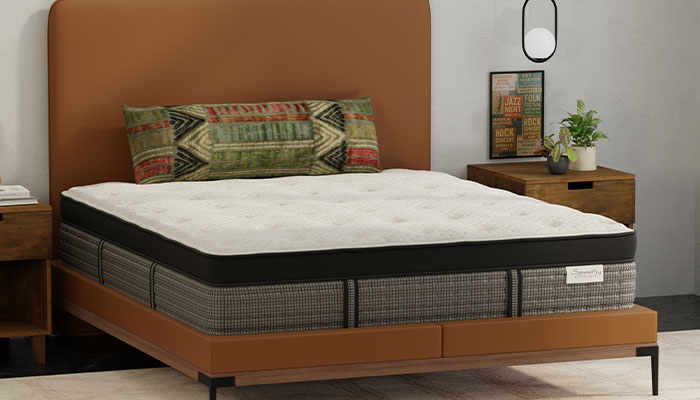
Mattress Features That Matter Most for Couples
When evaluating the best mattress for couples, focus on structural features rather than marketing labels:
Support Core Quality The foundation layer—whether coils, high-density foam, or hybrid construction—determines how consistently both bodies receive support. Individually wrapped coils provide better zoning than connected coils. High-density foams ensure weight-appropriate compression across the sleep surface. Quality support cores resist sagging more effectively, maintaining consistent support for both partners over time.
Pressure Relief Without Over-Softness Comfort layers should relieve pressure points while maintaining spinal alignment for couples. This requires responsive materials rather than extremely dense memory foam that can feel "stuck." Medium-density foams, latex, and gel-infused technologies balance pressure relief with responsiveness.
Edge Support Couples benefit from strong edge support that prevents roll-off sensations and maximizes usable sleep surface. Reinforced edges allow both partners to sleep close to the perimeter without feeling like they'll fall off, effectively increasing the functional size of the mattress.
Durable Construction For couples, durability directly impacts how long balanced support remains consistent. Mattresses with high-quality materials and reinforced construction maintain even support longer, preventing the sagging that creates uneven support disparities over time.

Signs Your Current Mattress Isn't Working for Both of You
Recognize these patterns as indicators that your shared mattress back pain issues or sleep problems stem from inadequate support for both bodies:
Morning Pain That Affects One or Both Partners If either partner consistently wakes with back, hip, or shoulder pain, the mattress isn't maintaining proper spinal alignment for that body.
Different Comfort Levels Despite Similar Sleep Duration When one partner feels well-rested and the other feels exhausted after the same night, support mismatch is often the culprit.
Frequent Position Changes and Waking Multiple awakenings, tossing, turning, or one partner frequently changing positions suggests they're unconsciously searching for proper support.
Better Sleep When Apart If both partners sleep better on separate mattresses, in different beds, or in hotels, your current mattress isn't accommodating both bodies well.
Visible Sagging on One Side More Than the Other Uneven wear patterns indicate weight-related compression disparities that worsen sleep quality for both partners.
One Partner Overheating or One Feeling Cold While temperature preference varies, when one partner consistently overheats while the other feels cool despite the same bedding, the mattress's thermal properties aren't meeting both needs.
Frequent Complaints About Partner Disturbance If motion transfer wakes one partner regularly, inadequate support forcing compensatory movement might be the underlying issue rather than true restlessness.
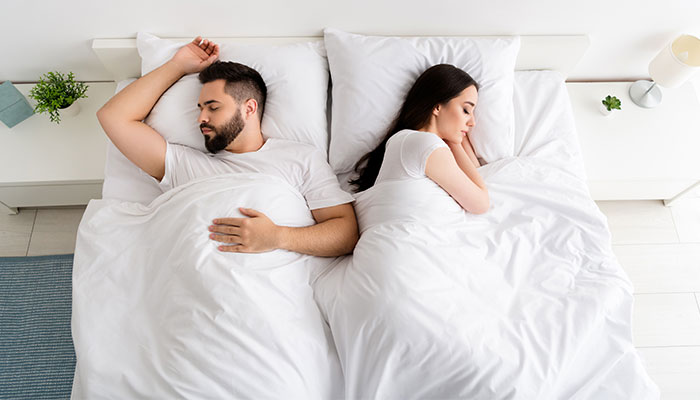
What Couples Can Try Before Replacing a Mattress
Before concluding that replacement is necessary, optimize your current setup:
Pillow Zoning Proper pillow height and support can partially compensate for uneven mattress support. Side sleepers benefit from thicker pillows, back sleepers from medium height, and stomach sleepers from minimal support. Experimenting with pillow placement under knees or between knees can improve alignment.
Sleep Position Adjustment Try consciously maintaining your optimal sleep position for a week. Sometimes partners shift positions unconsciously because the mattress isn't providing support for their preferred position. If deliberate positioning improves sleep quality, your mattress may be position-dependent rather than universally adequate.
Foundation Inspection Verify that your foundation isn't sagging or uneven. Slats should be no more than 3 inches apart and remain level. A compromised foundation can make even a quality mattress feel unsupportive. Learn more about how to fix a sagging mattress or foundation issues.
Mattress Rotation While not a permanent solution, rotating your mattress every 3-4 months can temporarily even out wear patterns. However, this only masks underlying support issues.
However, these adjustments have clear limits. If structural support has degraded, or if your mattress simply wasn't designed for both of your body types, these modifications won't create lasting improvement. Think of them as diagnostic tools—if they help, your mattress might be salvageable; if they don't, replacement likely becomes necessary.
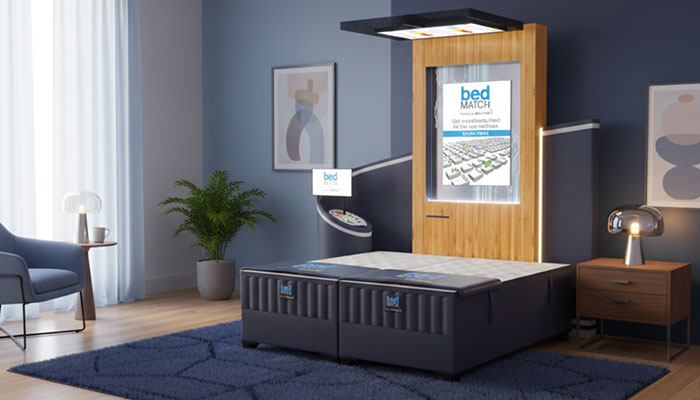
How BedMatch Helps Match Mattress Support for Two Bodies
The fundamental challenge when couples shop for mattress for two different body types is that you're trying to make a complex support decision based on brief in-store tests and subjective impressions—an approach that almost never accounts for how two different bodies actually interact with the same surface over eight hours.
BedMatch technology solves this by measuring what happens when both of you lie on potential mattresses. The system uses advanced pressure-mapping sensors to create detailed, color-coded maps showing exactly where each partner experiences high pressure (red zones) and where support is adequate (blue/green areas).
When you both lie in your natural sleeping positions on the BedMatch system, you get real data rather than guesses about mattress support differences. The technology doesn't try to force a compromise—it finds a surface where both bodies achieve proper alignment without either partner sacrificing support for the other.
This approach is particularly powerful for couples because it reveals what individual testing misses. You might discover that a medium-firm mattress works well for your lighter partner's side sleeping while providing adequate back support for your heavier partner's back sleeping—or you might find that a slightly firmer surface better accommodates both weight distributions while maintaining pressure relief where each of you needs it.
BedMatch methodology draws from biomechanical research showing that individualized pressure assessment predicts actual sleep satisfaction better than firmness labels or brief subjective tests. For couples, this translates to increased confidence that a selected mattress will actually work for both of you, reducing the likelihood of needing replacement shortly after purchase.
Sleep specialists at BedMatch locations help interpret your pressure maps and match both partners to mattresses that balance your combined needs. Rather than compromising, this approach finds surfaces where both bodies achieve optimal support and comfort. Learn more about what is BedMatch and how this measurement-based system can transform your couple sleep experience through the BedMatch assessment.
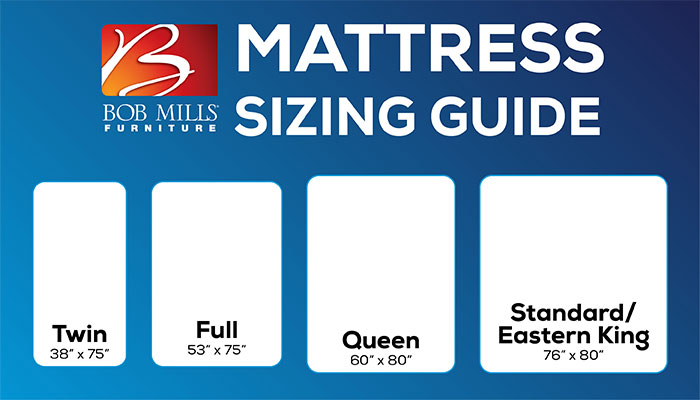
Finding Your Perfect Size for Better Couple Sleep
Mattress firmness for couples isn't just about the feel—it's also about having enough space for both partners to find their optimal positions. While firmness affects support, size determines whether you have adequate room to sleep without crowding or territorial disputes.
Many couples underestimate the importance of mattress size in sleep quality. A queen mattress provides each partner with roughly 30 inches of width—less than a twin bed. For couples dealing with movement sensitivity or different sleep positions, upgrading to a king size can dramatically improve sleep quality by reducing partner disturbance.
Before purchasing, consider whether your bedroom is big enough for a king-sized mattress. The investment in space often pays dividends in sleep quality, especially when combined with proper support matching.
Achieving Optimal Sleep as a Couple
Creating the ideal sleep environment extends beyond mattress selection. Temperature regulation, pillow configuration, and sleep hygiene all contribute to sleeping better as a couple. However, these optimizations only work when built on a foundation of proper mattress support for both partners.
Consider your complete sleep system when making mattress decisions. High-quality sheets, appropriate pillows for each partner's preferred position, and room temperature control all amplify the benefits of choosing the right mattress. Learn more about achieving the perfect night's sleep through comprehensive sleep environment optimization.
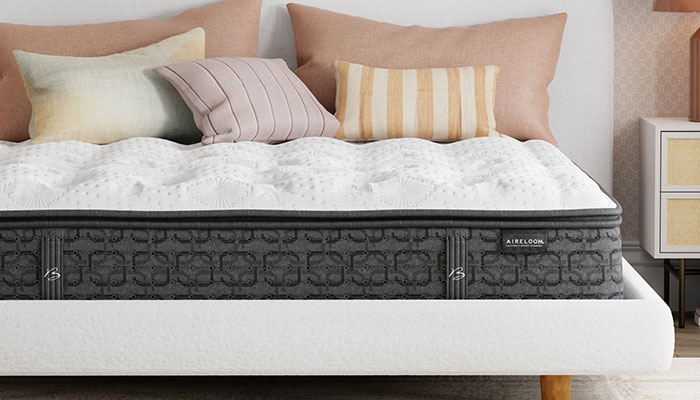
For couples considering luxury options, Aireloom mattresses represent premium construction designed for discerning sleepers who refuse to compromise on quality or comfort. These handcrafted mattresses often excel in providing the balanced support that demanding couples require.

Conclusion
Sleep quality as a couple isn't determined by "compatibility"—it's determined by whether your mattress supports both bodies well. When partners wake at different times, experience unequal pain, or feel fatigued despite full sleep duration, the problem rarely lies with your relationship. It typically indicates that your sleep surface isn't accommodating both of you adequately.
Sleeping better as a couple starts with recognizing that shared mattresses require different evaluation than individual beds. You can't simply choose what works for the heavier partner or the lighter one, or for the side sleeper or back sleeper. You need a system that supports both simultaneously—which is possible when you prioritize quality construction, balanced support, and measurement-based selection.
Rather than accepting that one partner will always sleep better than the other, or that you'll need separate beds to sleep well, invest in understanding your combined support needs. Explore mattress options with this shared-body perspective by browsing our mattress collection, comfort-focused mattresses, or premium Aireloom options. You can also read more about choosing a new mattress with both partners in mind.
Better sleep as a couple is achievable when you stop compromising and start matching support to both bodies. With the right mattress, you and your partner can finally experience the restorative sleep you both deserve—together.
Frequently Asked Questions
Q: How can couples choose the right mattress together?
A: Start by identifying each partner's key needs: body weight, preferred sleep position, temperature preferences, and any existing pain patterns. Rather than compromising on firmness, look for mattresses with balanced support cores and quality pressure relief that accommodate multiple body types and positions. BedMatch assessment helps identify options where both partners achieve proper alignment simultaneously.
Q: What if partners have different sleep positions?
A: Hybrid and advanced foam mattresses with zoned construction work best for position-diverse couples. Look for mattresses that provide pressure relief for side sleepers while maintaining lumbar support for back sleepers. Combination sleepers benefit from responsive materials that adapt quickly to position changes without feeling restrictive.
Q: Can one mattress support two different body types?
A: Absolutely. Quality mattresses with high-density support cores and well-designed comfort layers can accommodate significant weight differences. The key is choosing construction designed for weight diversity rather than assuming a single firmness level will work for both partners.
Q: Why do couples wake each other up at night?
A: Motion disturbance often reflects inadequate support rather than true restlessness. When partners don't have proper support, they unconsciously shift positions frequently, disturbing each other. Improving support through better mattress construction reduces tossing and turning, thereby reducing sleep disruption.
Q: Is firmness or support more important for couples?
A: Support is more important. Firmness is just a feel preference, while support determines whether both bodies maintain proper spinal alignment. A well-constructed medium-firm mattress with quality support layers will outperform a softer mattress with poor support or a firmer one with inadequate pressure relief.
Q: How do professionals match a mattress to two people?
A: Professional assessment uses pressure mapping to analyze how both partners interact with potential mattresses. BedMatch technology creates detailed pressure maps for both sleepers simultaneously, revealing where each person needs support and identifying mattresses that work for both body types without compromise.
Q: Does mattress choice affect relationship sleep quality?
A: Yes, significantly. When both partners sleep well, relationship satisfaction improves. Poor sleep affects mood, patience, and emotional regulation. Conversely, when one partner consistently sleeps poorly due to mattress issues, it can create resentment and relationship stress over time.
Q: Should couples always choose the firmest mattress for durability?
A: No. The firmest mattress isn't necessarily the most durable or appropriate. Quality construction with high-density materials provides durability while delivering appropriate support for both body types. Very firm mattresses can cause pressure point pain for lighter sleepers or side sleepers.
Q: How often should couples replace their mattress?
A: Quality mattresses typically last 7-10 years, but couples should monitor for signs of uneven wear, sagging, or reduced support quality. If either partner experiences worsening sleep quality or pain, evaluation for replacement may be necessary sooner.
Q: What's the best mattress size for couples?
A: King size provides optimal space for most couples, giving each partner 38 inches of width compared to 30 inches each on a queen. However, room size and budget constraints may make queen appropriate. California king works well for taller couples who need length more than width.
Medical Disclaimer:
This content is for informational purposes only and should not replace professional medical advice. Persistent back pain, sleep disorders, or health concerns should be evaluated by qualified healthcare providers.