Picture this familiar scenario: you wake up feeling like you've been wrestling with your pillow all night. Your lower back aches, your muscles feel tight, and it takes several minutes just to straighten up and walk normally. Yet by the time you've had your morning coffee, the pain mysteriously begins to fade away.
If this sounds like your typical morning routine, you're not alone. Millions of Americans experience morning back pain that gradually improves throughout the day—a pattern that often points to sleep-related factors rather than serious spinal conditions.
The culprit hiding in plain sight? Your mattress.
When morning back pain consistently disappears within an hour or two of waking up and moving around, it frequently indicates that your sleep surface isn't providing the proper support your body needs during those crucial 7-9 hours of rest that sleep quality research shows are essential for physical recovery and cellular repair.
While you sleep, poor mattress support forces your muscles to work overtime to maintain spinal alignment, leading to that all-too-familiar morning stiffness and discomfort.
The encouraging news is that mattress-related morning back pain is often preventable and correctable. Even better, modern technology now allows us to measure and evaluate mattress support scientifically, eliminating the guesswork from finding the right sleep solution for your specific body needs.

Why Does My Back Hurt When I Wake Up?
Morning back pain that improves during the day typically results from spending 6-8 hours in compromised positions that strain your muscles and joints. Unlike chronic back conditions that cause consistent pain, morning-only back pain usually signals positioning problems during sleep rather than structural spinal damage. This distinction is important, as Mayo Clinic research on back pain causes identifies prolonged poor positioning as a significant contributing factor to morning stiffness patterns.
The Science Behind Morning Stiffness
During sleep, several physiological changes contribute to morning back pain:
Reduced Blood Flow and Muscle Stiffness: When you remain in one position for hours, circulation to muscles and joints decreases significantly. This reduced blood flow causes muscles to stiffen and joints to feel "locked up"—similar to how a car engine needs warming up after sitting overnight.
Inflammatory Response to Poor Positioning: Your body's natural inflammatory response kicks in when tissues are stressed by poor sleep posture. This inflammatory process, as explained in Harvard Medical School research on sleep and inflammation, can be triggered by sustained pressure or misalignment during sleep. Inflammatory chemicals released during the night to address areas under strain explain why pain often peaks immediately upon waking and gradually subsides as you move around.
Core Muscle Deactivation: Your core muscles, which normally support your spine throughout waking hours, completely relax during sleep. Without proper mattress support to maintain spinal alignment, your back muscles must compensate by working harder, leading to fatigue and morning soreness.
Role of Sleep Posture and Alignment
Poor sleep posture creates a domino effect of problems. When your mattress allows your spine to curve unnaturally or creates pressure points at your shoulders and hips, your muscles remain partially contracted throughout the night to stabilize your body. This constant low-level muscle tension prevents truly restorative sleep and causes morning stiffness.
The key indicator that separates mattress-related pain from other back problems is timing: if your discomfort significantly improves within 30-60 minutes of getting up and moving around, your sleep surface likely contributes to the problem.
[Explore our mattress collection designed for optimal spinal support]
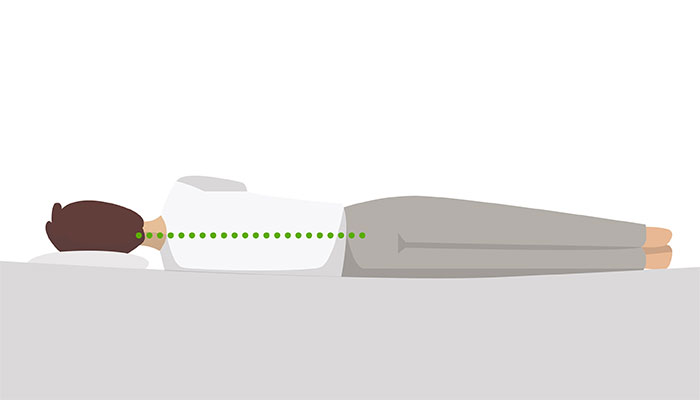
The Mattress and Back Pain Connection: Support vs. Comfort
Understanding the difference between mattress support and comfort is crucial for addressing morning back pain. Many people invest in expensive mattresses that feel comfortable initially but fail to provide the proper support needed for spinal health throughout the night.
What Is Mattress Support?
Support refers to your mattress's ability to maintain your spine's natural alignment—preserving the same gentle S-curve your spine has when you're standing with good posture. This distinction is crucial, as spine health experts' analysis of sleep surface support demonstrates that proper support ensures heavier body parts (like hips and shoulders) don't sink too deeply while providing adequate backing for lighter areas (such as your waist and neck).
Comfort, on the other hand, relates to how the mattress feels against your skin and provides immediate pressure relief. A mattress can feel wonderfully comfortable for the first few minutes but lack the structural integrity to maintain proper spinal support all night long.
Common Mattress Problems Causing Morning Back Pain
Sagging and Body Impressions: Even minor sagging of 1-2 inches can disrupt spinal alignment by creating a "hammock effect" where your midsection sinks lower than your head and feet. Over time, mattresses develop permanent indentations in areas where you sleep most frequently, and these depressions force your spine into unnatural curves.
Firmness Mismatch: A mattress that's too firm creates pressure points at your shoulders and hips, forcing your spine out of its natural alignment. Conversely, a mattress that's too soft allows these heavier body areas to sink excessively, creating a curved spine position that strains your back muscles throughout the night.
Inadequate Support Distribution: Your body requires different levels of support in different areas. Single-firmness mattresses may provide too much or too little support in various zones, leading to alignment problems and pressure points that contribute to morning back pain.
[Discover our memory foam mattresses engineered for superior support and pressure relief]

5-Minute Morning Back Pain Mattress Test
Before investing in a new mattress, perform this simple evaluation to determine if your current mattress contributes to your morning back pain. Complete this assessment over three consecutive mornings for the most accurate results.
Your Morning Back Pain Assessment Checklist
Immediate Wake-Up Evaluation (Within 5 minutes):
- Pain Intensity Rating: Rate your back pain from 1-10 and note specific locations (lower back, upper back, between shoulder blades)
- Movement Quality Assessment: How difficult is getting out of bed? Do you need to roll to your side first, or can you sit up directly?
- Posture Recovery Time: Can you stand up straight immediately, or do you need several minutes to "work into" normal posture?
- Pain Pattern Recognition: Does the pain feel muscular (tight, stiff) or joint-related (sharp, pinching)?
Physical Mattress Inspection
Visual Surface Examination: • Look for visible sagging, body impressions, or uneven areas where you typically sleep • Check if you naturally roll toward your partner due to mattress depression • Notice if fitted sheets frequently come loose, indicating mattress shape changes
Hands-On Support Tests: • Edge Support Test: Sit on the mattress edge—does it feel stable or collapse under your weight? • Hand Gap Test: Lie down in your normal sleep position and try sliding your hand under your lower back. Excessive space suggests inadequate contouring; inability to fit your hand at all may indicate the mattress is too soft • Recovery Test: Press firmly into the mattress surface and release—quality materials should return to shape within 10-15 seconds
Interpreting Your Test Results
Red Flags Indicating Mattress-Related Pain: • Morning pain rating of 6+ that decreases to 3 or below within 2 hours of waking • Visible sagging of 1 inch or more in your sleep area • Significant difficulty getting out of bed due to sinking or instability • Dramatic pain relief when sleeping on different surfaces (hotels, guest beds, couches) • Pain that's consistently worse following nights of poor sleep quality
Moderate Warning Signs: • Consistent morning stiffness rated 4-5 that improves with movement and activity • Occasional rolling toward the center due to gradual mattress depression • Intermittent sleep disruptions from partner movement or discomfort • Gradual increase in morning pain over recent months
Positive Support Indicators: • Minimal morning stiffness (2-3 rating) that resolves within 15-30 minutes • Stable, even mattress surface with minimal visible wear patterns • Easy, comfortable movement getting in and out of bed • Consistent sleep quality without pain-related disruptions

When It's Time for Mattress Replacement
Recognizing genuine mattress replacement needs requires balancing comfort, support, hygiene, and financial considerations. Rather than relying on fear-based marketing tactics or arbitrary timelines, focus on objective indicators that signal real replacement necessity. These timelines align with Sleep Foundation studies on mattress lifespan that factor in material quality and usage patterns.
Realistic Mattress Lifespan Guidelines
Different mattress materials have varying expected lifespans under normal use conditions:
Memory Foam Mattresses: 8-12 years • Higher density foams (4+ lbs per cubic foot) typically last longer • Quality varies significantly between manufacturers and price points • Heat retention issues may worsen over time as materials break down
Natural and Synthetic Latex: 12-20 years • Natural latex generally outlasts synthetic versions • Maintains consistent support characteristics longer than other foam types • Represents the most durable mattress material currently available
Innerspring Mattresses: 6-10 years
• Coil quality, gauge, and count significantly impact longevity • Often show visible sagging before comfort layers fail completely • Edge support and motion isolation typically deteriorate first
Hybrid Mattresses: 8-12 years • Lifespan depends on quality of both foam comfort layers and coil systems • Combines durability benefits and limitations of component materials • Well-constructed hybrids often provide excellent longevity value
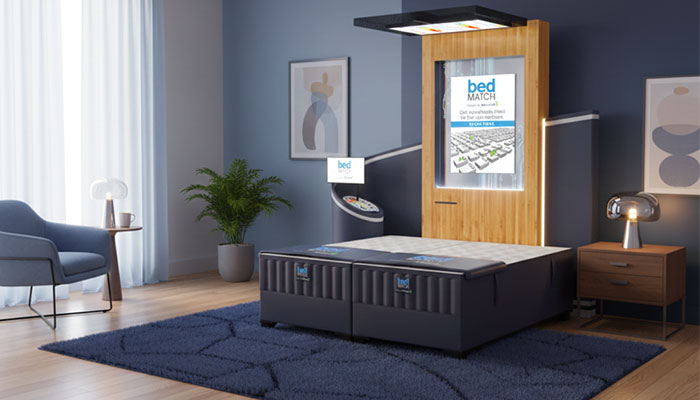
How BedMatch Helps Identify the Right Support System for Your Back Pain
Traditional mattress shopping relies heavily on brief in-store testing, general firmness preferences, and hope that your choice will work long-term. BedMatch technology transforms this approach by providing scientific analysis of your specific body support needs, eliminating the trial-and-error process that often leads to continued morning back pain.
Understanding BedMatch Technology and Analysis
BedMatch uses advanced pressure mapping and postural analysis to evaluate how different mattresses support your unique body geometry, weight distribution, and sleep position preferences. The accuracy of this approach is validated by peer-reviewed research on pressure mapping accuracy, demonstrating that objective measurement provides superior results compared to subjective comfort testing. Instead of relying on how a mattress feels during a 10-15 minute store visit, this system measures actual physiological factors that affect your sleep quality and spinal health.
The BedMatch Evaluation Process:
The system analyzes your body's pressure points and support requirements while you lie on various mattresses in your natural sleep positions. Advanced sensors capture detailed data about pressure distribution, spinal alignment, and support adequacy across different mattress options and configurations.
Comprehensive Measurements Include:
• Pressure point mapping showing areas of excessive pressure that could disrupt circulation and sleep • Spinal alignment analysis in your preferred sleep positions to ensure proper support • Weight distribution assessment to match mattress support zones with your body's needs • Motion isolation evaluation important for couples sharing a mattress • Edge support analysis for overall mattress stability and usable sleep surface
Eliminating Guesswork from Mattress Selection
Traditional mattress shopping often fails because brief store testing cannot replicate the conditions of 7-9 hours of actual sleep. Testing a mattress for 10-15 minutes while fully clothed, in bright store lighting, with distractions and time pressure hardly represents real sleep conditions.
BedMatch Scientific Advantages: • Consistent Methodology: Every customer receives the same comprehensive, objective analysis regardless of salesperson knowledge or bias • Position-Specific Evaluation: Testing occurs in your actual sleep positions, not just standard flat-on-back positioning • Body Type Accuracy: System accounts for how your specific height, weight, and body shape affect mattress performance • Long-Term Correlation: Data correlates with long-term satisfaction and sleep health rather than immediate comfort impressions
Individual Variation Recognition: BedMatch acknowledges that no two bodies are identical and accounts for these important factors: • Height and weight distribution differences that affect support needs • Sleep position preferences and natural movement patterns during sleep • Existing comfort sensitivities and personal preferences • Partner compatibility requirements for shared mattresses • Health considerations that might affect support requirements
Unbiased, Transparent Mattress Recommendations
One of BedMatch's most valuable features is its brand-neutral approach to mattress recommendations. The system evaluates mattresses based solely on how well they support your specific body, without consideration of profit margins, manufacturer relationships, or sales incentives.
Avoiding Common Retail Biases: Traditional mattress retail often guides customers toward higher-margin products or featured brand partnerships rather than optimal support matches. BedMatch recommendations focus entirely on support compatibility, potentially directing you toward better-value options or away from expensive mattresses that don't suit your body type.
Transparent Pricing and Value Guidance: The system helps you understand which mattress features actually benefit your specific sleep needs versus marketing features that may be unnecessary for your body type and sleep style. This prevents overpaying for characteristics that don't address your morning back pain concerns while ensuring investment in support features that matter most for your health.
Quality vs. Marketing Distinction: BedMatch helps separate genuine performance benefits from marketing claims by measuring actual support characteristics. A heavily marketed, expensive mattress might provide inferior support for your body compared to a more modestly priced option that better matches your specific requirements.
Schedule your BedMatch consultation today.

Take Action for Pain-Free Mornings
Morning back pain that improves throughout the day often represents a solvable problem rather than a chronic condition requiring extensive medical intervention. By understanding the critical connection between mattress support and spinal alignment, you can take concrete steps toward eliminating morning pain and achieving genuinely restorative sleep.
The essential insights for addressing morning back pain include recognizing that proper support differs significantly from immediate surface comfort, understanding how your individual sleep position affects support requirements, and knowing when minor adjustments might help versus when systematic replacement becomes necessary.
Your Morning Back Pain Action Plan
Step 1: Assess Your Current Situation Complete the 5-minute morning back pain mattress test consistently for three days to determine whether your mattress contributes to your discomfort patterns.
Step 2: Try Appropriate Interim Solutions
Address any foundation problems, consider suitable mattress toppers for minor issues, and optimize your pillow support system based on your sleep position needs.
Step 3: Evaluate Support Needs Scientifically For persistent morning pain or when replacement time arrives, seek objective analysis of your individual support requirements rather than relying on general firmness recommendations.
Step 4: Make Evidence-Based Decisions Choose your mattress solution based on measured body support compatibility rather than marketing claims, price assumptions, or arbitrary firmness preferences.
Why Scientific Mattress Analysis Matters
Rather than continuing to wake up in pain or investing in products that might not address your specific support needs, consider experiencing BedMatch analysis to understand exactly what type of mattress support your body requires for optimal spinal health.
This scientific approach takes the uncertainty out of mattress selection by providing objective data about pressure distribution, spinal alignment, and support adequacy that manual testing simply cannot match.
Ready to end your morning back pain? Visit Bob Mills Furniture to discover how BedMatch technology can identify the ideal mattress support system for your individual body requirements. Our sleep specialists will guide you through the scientific evaluation process and help you find a solution that addresses your specific back pain concerns—objectively, accurately, and without guesswork.
Your path to pain-free mornings and truly restorative sleep starts with understanding your body's unique support needs through proven scientific analysis.
Find your nearest Bob Mills location for BedMatch analysis
Note: Bob Mills Furniture Company, LLC does not represent or endorse any specific health related benefits arising from the purchase or use of any specific product, and not liable for any physical discomfort or impairment arising out of the purchase and use of any specific product. The opinions expressed or information provided by our staff is not intended as a diagnosis, treatment, or provision of medical advice and is not a substitute for professional medical advice, diagnosis or treatment. Please consult a physician or other health care professional for your specific health care and/or medical needs or concerns.
.
Frequently Asked Questions
Q: How do I know if my mattress is causing my morning back pain?
A: The clearest indicator is morning back pain that significantly improves within 30-90 minutes of waking up and moving around. Try sleeping on a different surface (firm couch, guest bed, or hotel mattress) for 2-3 nights. If your pain decreases substantially, your mattress likely contributes to the problem. Other signs include visible mattress sagging, difficulty getting out of bed due to sinking, and consistent pain relief when sleeping elsewhere.
Q: What's the difference between a firm mattress and a supportive mattress for back pain?
A: Firmness describes how the mattress surface feels initially—firm mattresses feel hard while soft mattresses allow immediate sinking. Support relates to maintaining proper spinal alignment throughout the night. According to clinical research on mattress firmness and spinal alignment, the optimal choice depends on individual body characteristics. A mattress can be relatively soft yet highly supportive if it contours appropriately while providing adequate resistance to keep your spine neutral. Conversely, a firm mattress may lack proper support if it creates pressure points that force your spine out of alignment.
Q: Can a mattress topper fix morning back pain caused by my mattress?
A: Mattress toppers help with specific, limited issues like pressure points on overly firm mattresses or very minor sagging (less than 1 inch). However, toppers cannot correct major structural problems, significant sagging, poor edge support, or fundamental support mismatches. If your mattress has multiple issues or is over 8-10 years old, replacement typically provides more effective relief than topper solutions.
Q: How long should I expect morning back pain to last after getting a new mattress?
A: This timeline aligns with Johns Hopkins guidelines on adaptation periods for musculoskeletal adjustments. Most people adjust to a properly selected new mattress around 4 weeks, though adjustment time varies based on how different the new mattress is from your previous one. If your new mattress correctly matches your support needs, morning back pain should begin improving within the first few weeks and continue decreasing throughout the adjustment period. Pain that persists or worsens after 30 days may indicate the mattress doesn't suit your support requirements.
Q: When should I see a doctor about my morning back pain?
A: Consult healthcare providers if your morning back pain: persists longer than 2 hours after waking, includes numbness or tingling in your legs, occurs with other symptoms like fever or unexplained weight loss, continues despite improving your sleep surface, or significantly worsens over time. These symptoms may indicate conditions beyond sleep surface issues, as outlined in